Six-day visit brings Srebrenica Memorial Center leadership together with educators, universities, museums, survivors, community organizations and U.S. Congressman Wesley Bell.
ST. LOUIS, Mo. — A delegation from the Srebrenica Memorial Center concluded a six-day visit to St. Louis on October 26, following a series of meetings aimed at strengthening educational partnerships, preserving the historical record of the Srebrenica genocide and expanding cooperation between institutions in Bosnia and Herzegovina and the United States.
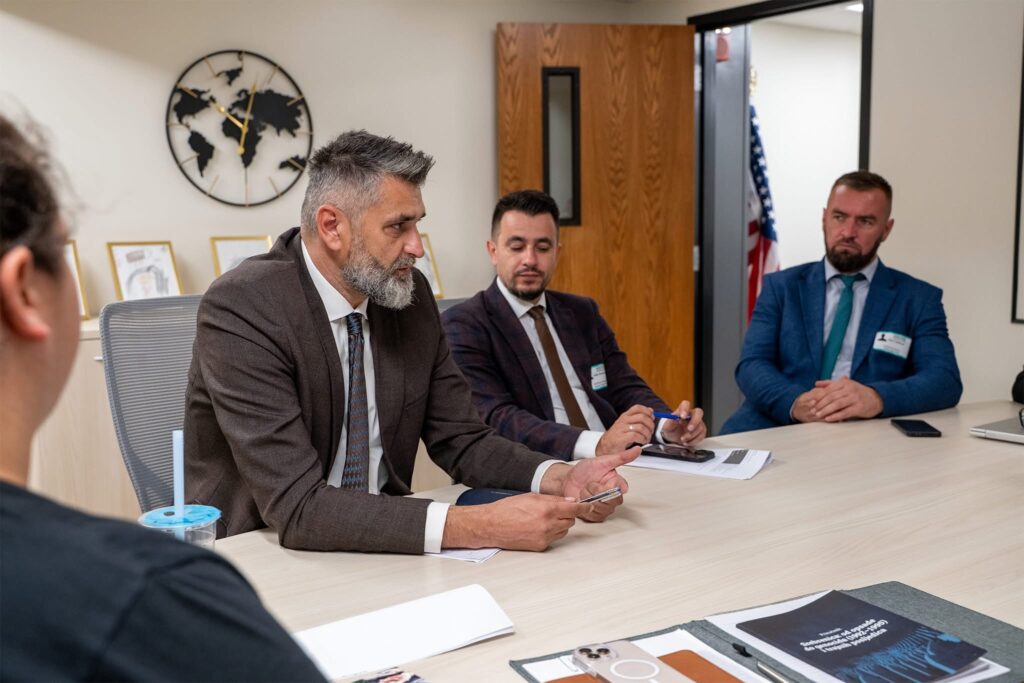
Led by Memorial Center Director Dr. Emir Suljagić, the delegation included Almir Salihović and Edin Ikanović, coordinators of the Center’s school partnership programs. Their visit, which began October 21, brought them into contact with local high schools, universities, museums, religious institutions, survivor organizations and political representatives.
At the heart of the visit was an effort to move beyond annual commemorations and establish lasting partnerships that would bring the history of Srebrenica into American classrooms, academic research and public institutions.
St. Louis, home to one of the largest Bosnian communities outside Bosnia and Herzegovina, provided a particularly meaningful setting for those conversations. Thousands of Bosnians who fled the 1992–1995 war rebuilt their lives in the region, establishing a community whose experiences remain closely connected to the history the Memorial Center works to preserve.
The visit also underscored the growing importance of cooperation between the Memorial Center and institutions abroad at a time when genocide remembrance, historical documentation and education remain central to its mission.
Bringing Srebrenica Into American Classrooms
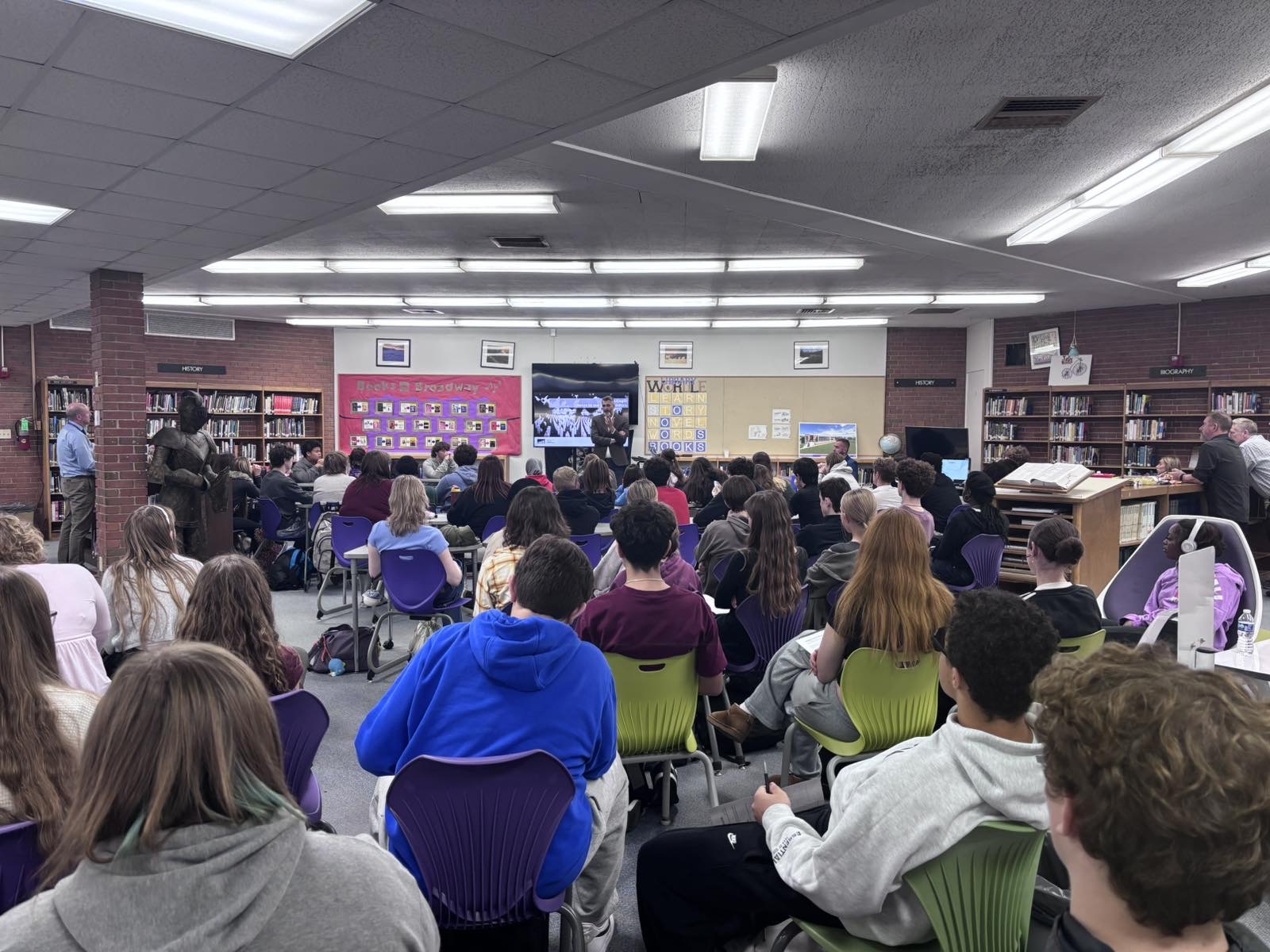
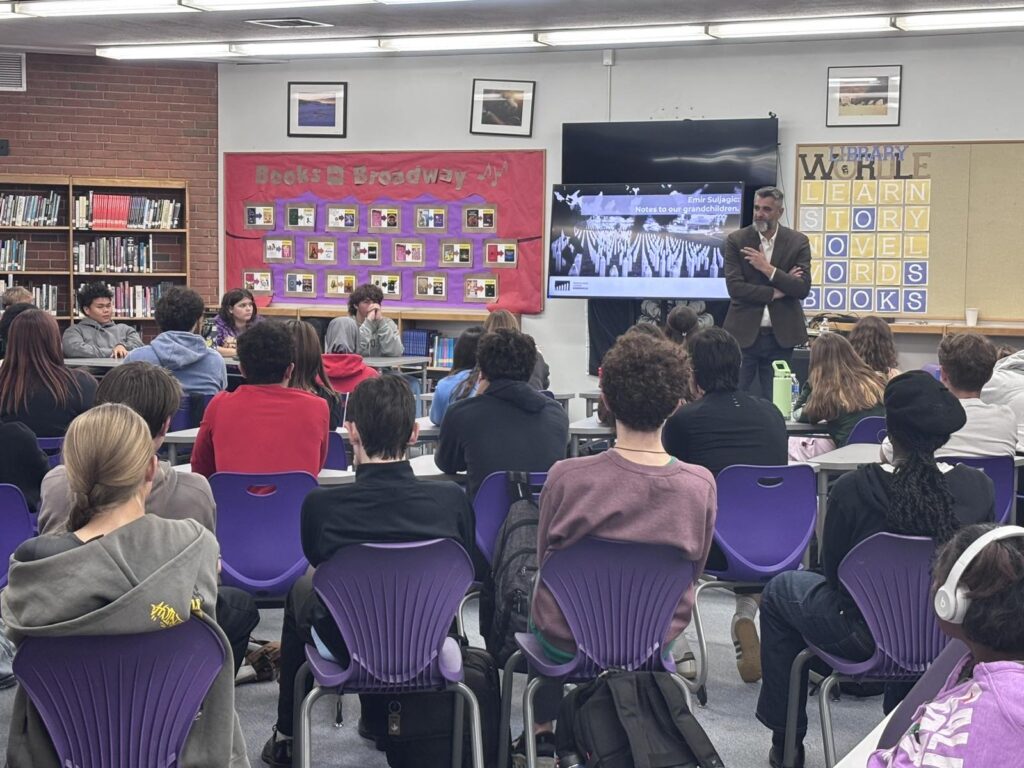
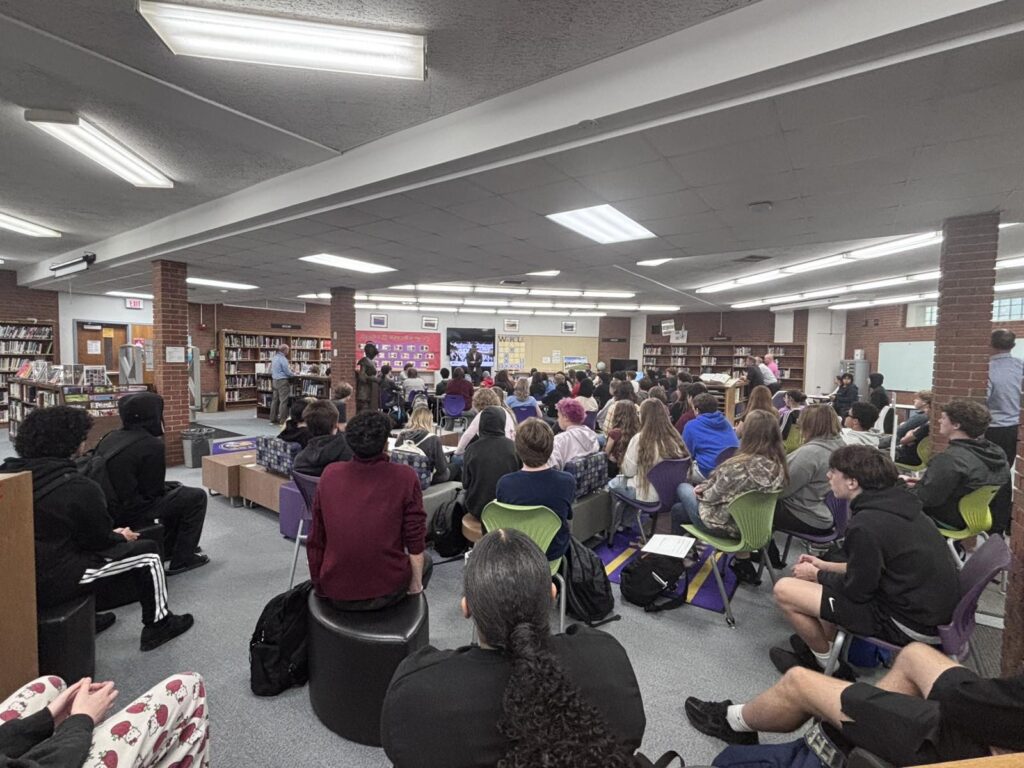
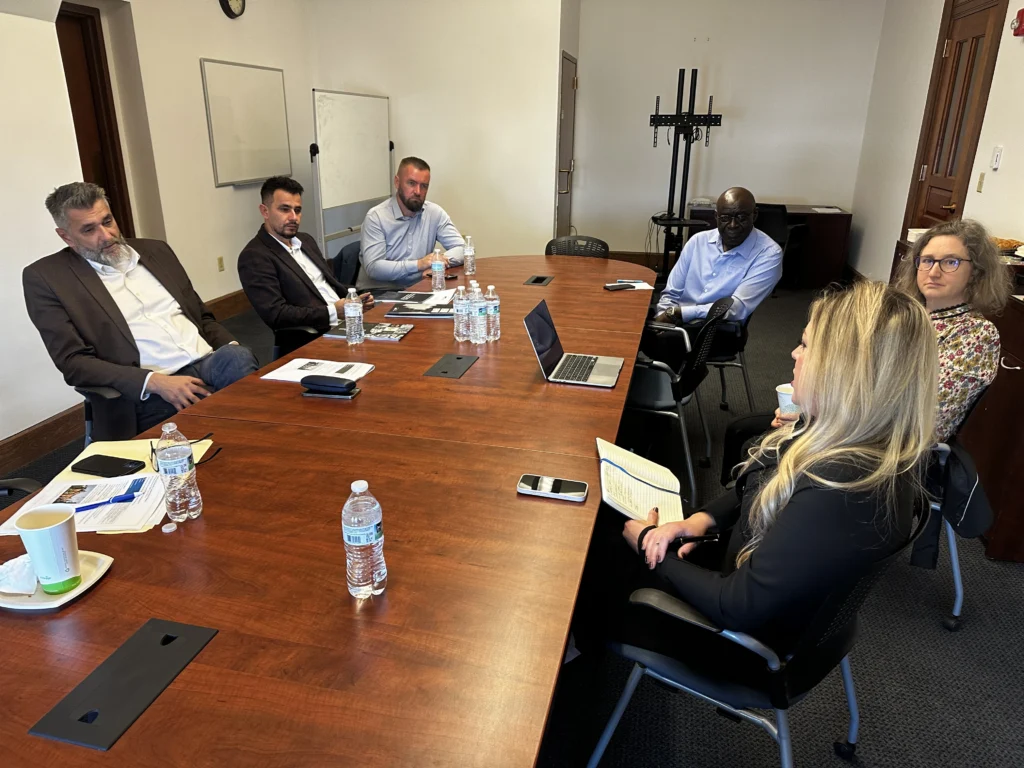
Education was a central focus of the delegation’s engagements, particularly its visits to Affton High School and Bayless High School, where discussions examined how the history of the Srebrenica genocide could be incorporated into American curricula.
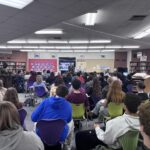
At Affton High School on October 21, Suljagić met with students, teachers and school leaders to discuss Bosnia and Herzegovina, the genocide in Srebrenica, human rights and the importance of preserving historical facts and the dignity of victims.
The conversation also explored educational resources, professional development for teachers, student research opportunities and potential future collaboration with the Memorial Center.
For Suljagić, the opportunity to speak directly with young people was among the most meaningful aspects of the visit.
“For me, meeting young people who want to learn more about Bosnia and Herzegovina, our story, our history, its context and Srebrenica was deeply important,” Suljagić said. “These conversations show a genuine desire to understand what happened and why it remains essential to safeguard facts, memory and the dignity of victims.”
The following day, the delegation visited Bayless High School, where it was welcomed by Principal Eric Lawrence, Assistant Principal Dr. Alyssa Stock, Director of English Language Development Dr. Monika Hasanbasic, Social Studies Teacher and Curriculum Chair Emily Klein, and English Language Arts Teacher Katy McAllister.
The discussions went beyond introducing students to the events of July 1995. Educators and delegation members examined how genocide, war crimes and human rights can be taught responsibly in culturally diverse classrooms, particularly when students bring different historical experiences and family backgrounds to their education.
Special attention was given to survivor testimonies, primary historical documents, judicial findings and the Memorial Center’s extensive documentation of the genocide.
The meeting also opened possibilities for teacher training, educational material exchanges, collaborative student research and school-based remembrance initiatives.
These efforts form part of the Memorial Center’s broader strategy to develop partnerships with educational institutions across the United States and ensure that the history of Srebrenica is taught through reliable evidence, established historical facts and the experiences of survivors.
Building Academic Partnerships
The delegation’s educational outreach extended to higher education, including a visit to the Department of History at Saint Louis University on October 21.
There, Suljagić, Salihović and Ikanović met with Dr. Torrie Hester, Dr. George O. Ndege, Amina Bajramović, Ira Trako and Elvedin Pašić to explore opportunities for strengthening the study of the Srebrenica genocide, war crimes, human rights and Bosnian history.
The conversation addressed the use of archival materials, court judgments, primary historical sources and survivor testimonies in university teaching and research.
Participants also discussed potential academic partnerships involving student placements, oral-history projects, research initiatives and guest lectures.
“Passing knowledge about genocide on to future generations requires reliable sources, well-prepared educators and a space in which students can ask questions and think critically about the past,” Salihović said.
Ikanović emphasized the role universities can play in connecting scholarly research with public education and community engagement.
“Knowledge about Srebrenica must be part of serious academic work, research and dialogue among young people,” he said.
The delegation’s St. Louis itinerary also included the University of Missouri–St. Louis, where discussions were planned around Holocaust and genocide education, war-crimes documentation, historical memory and potential academic research partnerships.
At Webster University, the program included engagement with the Institute for Human Rights and Humanitarian Studies, with particular attention to the connections between genocide, forced migration, refugee experiences and human rights education.
Together, these academic engagements reflected a broader objective: making the history of Srebrenica a sustained subject of research and teaching rather than one addressed primarily during commemorative events.
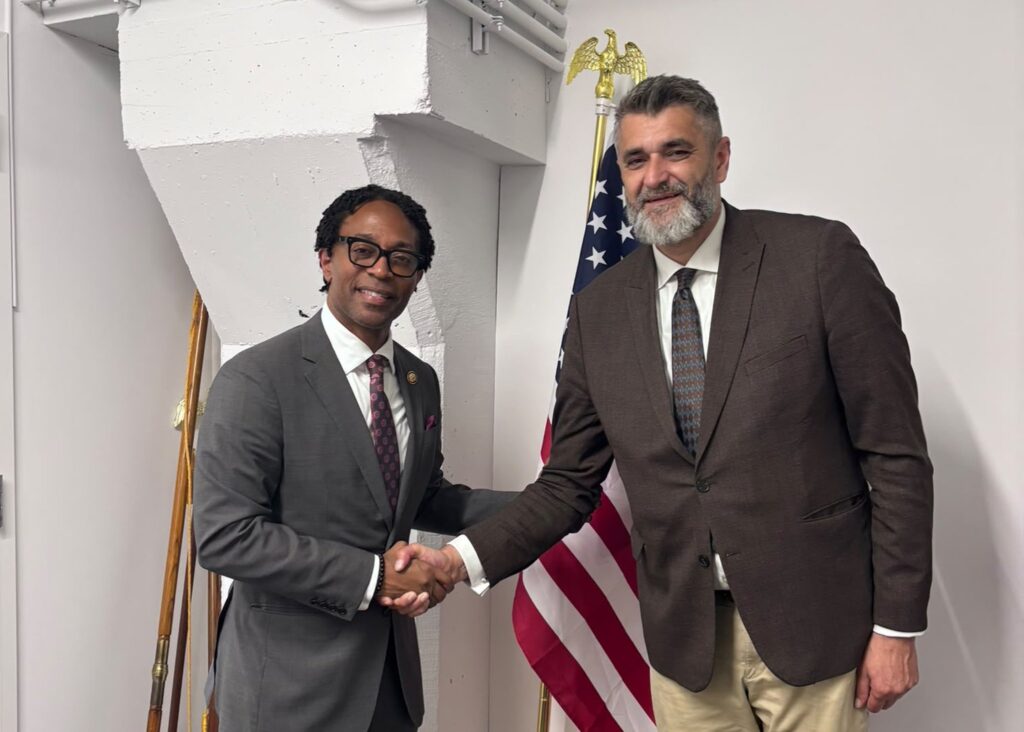
Congressman Wesley Bell Meets With Memorial Center Director
The delegation’s visit also included a meeting between Suljagić and U.S. Congressman Wesley Bell, adding a diplomatic and political dimension to a program otherwise largely focused on education and remembrance.
Their discussion addressed ongoing institutional pressures facing the Srebrenica Memorial Center, genocide remembrance and education, and the importance of continued American engagement in supporting Bosnia and Herzegovina’s sovereignty, stability and democratic institutions.
The meeting provided an opportunity for the Memorial Center to raise concerns about the challenges facing its work and the importance of international support for institutions dedicated to preserving the historical record of the genocide.
In a statement following the meeting, the Memorial Center thanked Bell for his continued support for the institution and Bosnia and Herzegovina, as well as his commitment to historical truth and accountability.
The Center also acknowledged the Congress of Bosniaks of North America (CBNA), which facilitated the meeting and supported the delegation’s work in the United States.
The engagement highlighted the importance the Memorial Center places on maintaining relationships with American policymakers alongside its expanding network of educational and cultural partners.
Connecting the Memory of Srebrenica and the Holocaust
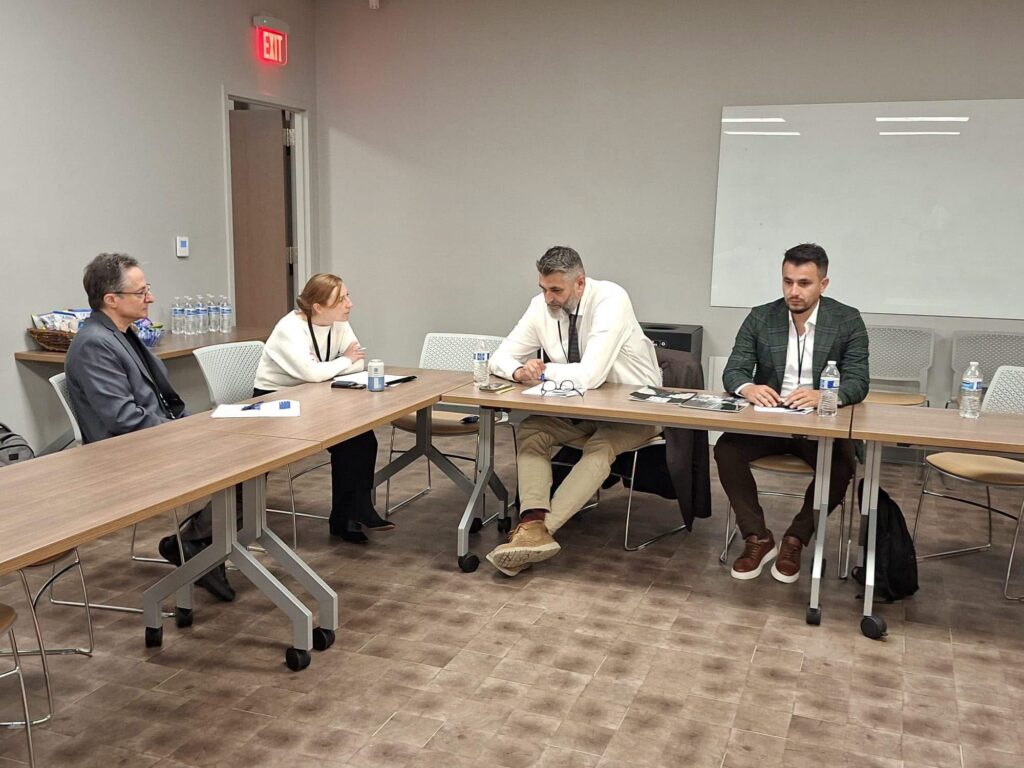
Another significant engagement took place at the St. Louis Kaplan Feldman Holocaust Museum, where Suljagić met with Museum Director Myron Freedman and Director of Education Helen Turner.
The meeting brought together representatives of two institutions whose work centers on preserving evidence of mass atrocities, honoring victims and educating future generations.
Discussions focused on approaches to Holocaust and genocide education, the preservation of survivor testimony, the documentation of crimes and the challenges of communicating difficult histories to younger audiences.
The institutions also explored possibilities for future cooperation in education and memorialization.
While the Holocaust and the Srebrenica genocide occurred in distinct historical circumstances, both institutions face questions about how to preserve firsthand accounts, maintain historical accuracy and ensure that the experiences of survivors remain accessible as generations change.
The exchange offered an opportunity to examine how established approaches to Holocaust education might inform the Memorial Center’s international educational initiatives while respecting the distinct histories of both atrocities.
Strengthening Ties With St. Louis’s Bosnian Community
Beyond its institutional engagements, the delegation’s itinerary devoted considerable attention to the Bosnian-American community, whose history of displacement, resettlement and remembrance gives St. Louis a special connection to Srebrenica.
The weekend program included visits to the Bosnian Islamic Center of St. Louis and the St. Louis Islamic Center, also known as Džemat Nur.
These engagements were designed to examine the role of religious and community institutions in preserving Bosnian language, cultural identity and historical memory, particularly among younger generations born or raised in the United States.
Discussions centered on community education, youth engagement, survivor support and opportunities to develop programs connecting Bosnian-American families more closely with the Memorial Center’s work.
A community dinner and informal discussion at Džemat Nur provided an additional opportunity for exchanges among the delegation, community representatives, religious leaders, survivors and families.
The delegation’s schedule also included a meeting with the Association of Survivors of the Srebrenica Genocide in St. Louis.
That engagement placed particular emphasis on preserving survivor testimony, documenting personal and family histories, and ensuring that the experiences of those who endured the genocide remain part of the historical record.
For a community in which survivors and their descendants continue to live with the consequences of the war, these conversations carry significance beyond institutional cooperation.
They also raise an increasingly urgent question: how can the memories and experiences of the generation that survived the genocide be preserved and passed on to children and grandchildren who know Bosnia primarily through family stories, community institutions and occasional visits?
The Memorial Center’s outreach sought to strengthen those connections and identify ways in which community organizations could contribute to future educational and documentation initiatives.
Preserving Bosnian-American History
The final day of the visit included programming at the Missouri History Museum, where the delegation’s itinerary focused on the preservation and interpretation of Bosnian-American history.
The planned discussions addressed the collection of oral histories, community archives, museum exhibits and opportunities to document the experiences of Bosnians who resettled in St. Louis following the war.
The history of the Bosnian community in St. Louis is closely intertwined with the city’s broader immigrant and refugee experience. From the arrival of families displaced by war to the establishment of businesses, religious institutions and cultural organizations, that history has become an important part of the region’s social fabric.
Preserving it presents opportunities for cooperation between the Memorial Center, local historians, museums, researchers and community organizations.
The delegation’s program also included a St. Louis–Srebrenica partnership planning session at the Missouri History Museum, intended to identify practical initiatives that could be pursued over the coming months.
Among the priorities outlined for the session were educational exchanges, research collaborations, teacher workshops, public programs, guest lectures and projects focused on historical documentation.
The objective was to translate the relationships developed during the visit into sustained cooperation, with participating institutions identifying potential responsibilities, resources and follow-up opportunities.
Specific agreements or commitments resulting from the planning session have not yet been publicly detailed in the materials available for this report.
A Visit With Long-Term Ambitions
The Srebrenica Memorial Center’s visit to St. Louis took place more than three decades after the genocide of July 1995, when Bosnian Serb forces killed more than 8,000 Bosniak men and boys in and around Srebrenica. The atrocities have been legally established as genocide by international courts.
Today, the Memorial Center’s mission extends beyond commemorating those who were killed. Its work includes historical documentation, research, education and the preservation of survivor testimony, with an increasing emphasis on international cooperation.
The St. Louis visit reflected that expanding approach.
By engaging American schools, universities, museums, political representatives and Bosnian-American organizations, the delegation sought to establish relationships through which knowledge about Srebrenica can reach audiences far beyond Bosnia and Herzegovina.
The Memorial Center expressed gratitude to Akif Cogo, Patrick McCarthy and the broader Bosnian-Herzegovinian community in St. Louis for their support in making the visit possible.
The delegation’s activities were carried out with the support of the Government of the Kingdom of the Netherlands.
For St. Louis, the visit offered an opportunity to connect its own Bosnian history with the institutions working to preserve the memory of the genocide. For the Memorial Center, it opened new channels for educational outreach, academic engagement and cooperation with a diaspora community that has maintained close ties to Bosnia and Herzegovina for more than three decades.
Whether the discussions result in new curricula, collaborative research, museum programming or lasting institutional agreements will depend on the work that follows.
But the central purpose of the visit was clear: to ensure that the history of Srebrenica is not only remembered, but studied, documented and understood by generations who did not witness it.